Image
Location
Guatemala
Area of work and rights defended
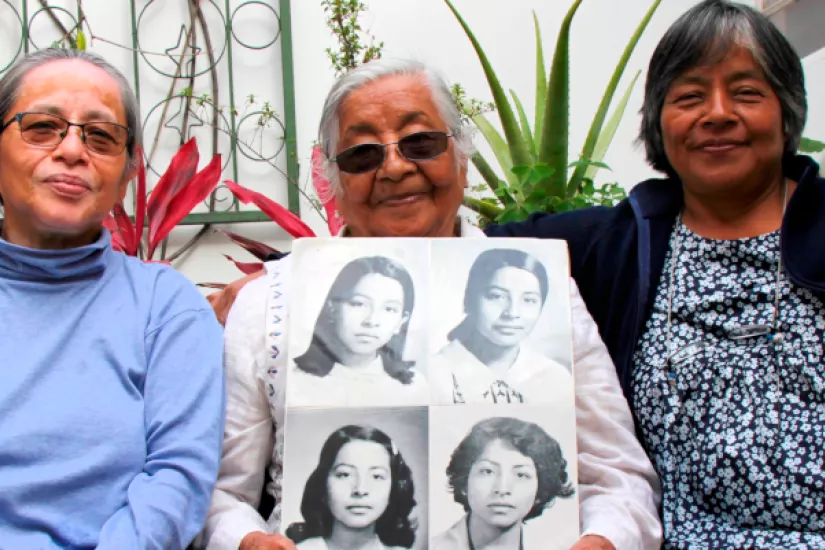
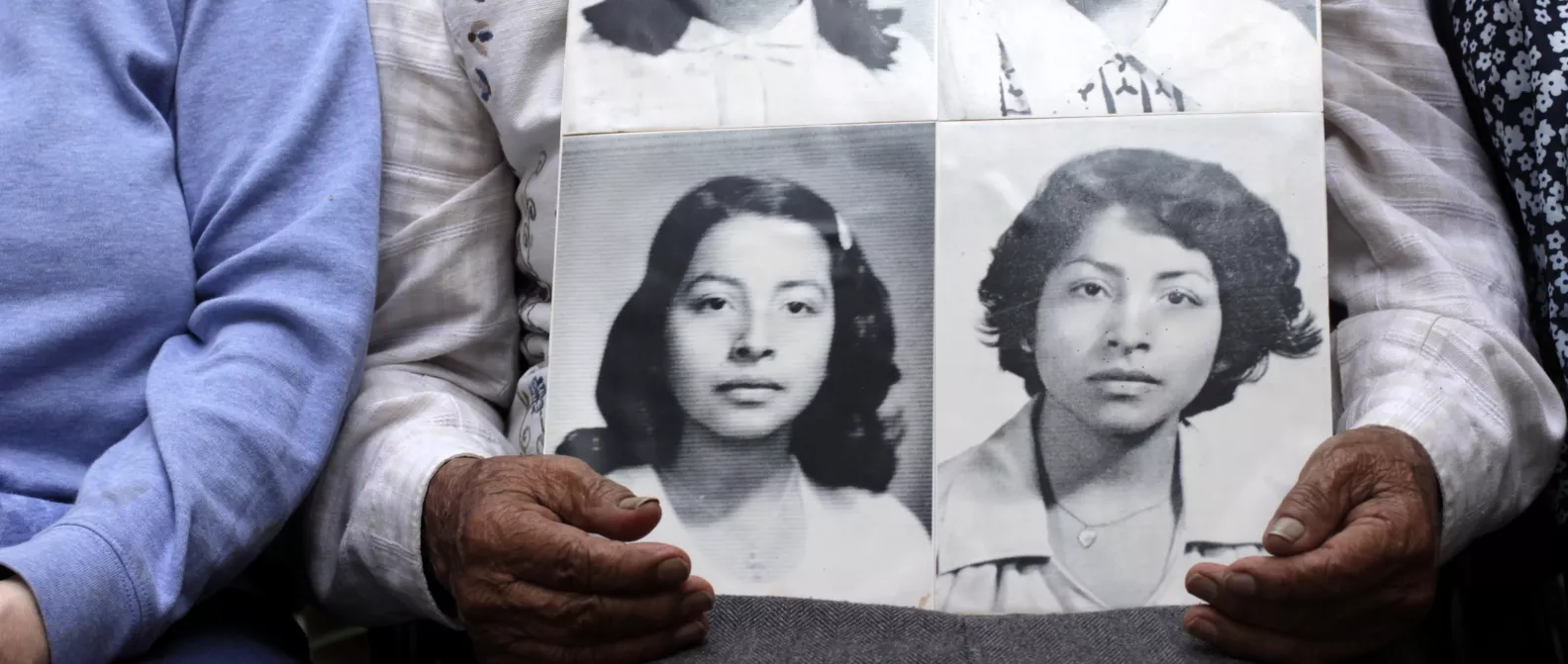
The family of Luz Leticia Hernández Agustín has been searching for her for 40 years. She was detained and disappeared on November 21, 1982.
Her father, Don Jorge Hernández, and her mother, Doña Valentina Agustín, joined other relatives of people who were detained-disappeared, in founding the Mutual Support Group (GAM), whose objective was to search for their loved ones.
Don Jorge carried out a tireless struggle in search of the truth about what happened to his daughter until his death in January 2021. He was accompanied in this struggle by his partner, Valentina Agustín and his daughters Mirtala and Marta, who continue this path today. They had to wait until January 2023 for the case to begin in the Guatemalan courts.
Description of the case
Between 1960 and 1996 Guatemala experienced a bloody Internal Armed Conflict that saw different phases of intensity. The insurgencies were directed against the successive dictatorial regimes that ruled the country since the 1954 coup d’état against the democratic government of Jacobo Arbenz, which ended the decade known as Guatemala’s democratic spring (1944-1954). Three decades later General Efraín Ríos Montt assumed the de facto presidency, following a coup d’état in March 1982. Under his rule state violence against the indigenous population in rural areas and against urban militants, mostly public university students, trade unionists and other opponents of the dictatorships, reached an aberrant and unprecedented level of cruelty.
It was in this context that Luz Leticia Hernández Agustín, who was 25 years old at the time and a student of economics at the University of San Carlos, became involved in the urban insurgency. In doing so she assumed a clandestine life in pursuit of a just and democratic Guatemala. She participated in the kidnapping of Jorge Mario Ríos Muñoz, nephew of the head of state at the time, Efraín Ríos Montt, in order to demand the release of a comrade who had been kidnapped a few weeks earlier. She was detained and disappeared in a police operation on November 21, 1982. The operation was led by Juan Francisco Cifuentes Cano, commander of the Special Operations Reaction Battalion (BROE) of the then National Police (PN) between 1982 and 1984, also known as the Fifth Corps. Cano was arrested on May 21, 2021 for the Diario Militar case. In January 2023, the “Luz Leticia y Otros” trial began in the 5th Criminal Court of First Instance, in which he is the only defendant.
Cano was indicted for crimes against humanity and the disappearance of Luz Leticia Hernández Agustín and Ana María López in the last hearing of this first phase of the process, held on January 20. The judge remanded him in custody in the military hospital and granted him three months to continue with the investigations. The case will continue with its intermediate phase at the end of April 2023.
In the last hearing of the first phase of the process, held on January 20, Cano was indicted for crimes against humanity and for the disappearance of Luz Leticia Hernández Agustín and Ana María López. The judge imposed preventive detention in the military hospital and granted a period of 3 months to continue with the investigations.
The intermediate phase, specifically the offers of evidence, was extended until December 2025 due to changes of judges, various legal actions by the defense and suspensions. Finally, on December 1, despite the fact that Judge Judith Secaida did not accept some means of evidence, she concluded to send Cifuentes Cano to oral and public debate, which is scheduled to begin on May 5, 2026.
On September 17, 2026, more than 44 years after the crimes in question were committed and following 42 hearings held between May and September of this year, the Eighth Criminal Sentencing Court sentenced the ex-commander of the Special Operations Reaction Battalion (BROE), Juan Francisco Cifuentes Cano, to a total of 50 years in prison, without the possibility of commuting the sentence (25 years for each victim), for the forced disappearances of Luz Leticia Hernández Agustín and Ana María López Rodríguez. In addition, the court ruled that the Public Prosecutor’s Office (MP) must continue investigating other police and army officers who may have been involved in these events. The court did not find sufficient evidence to support the charges of crimes against humanity. Luz Leticia’s sisters, who have continued the struggle that their parents, Valentina and Jorge, began, said they were satisfied with the verdict. However, they noted that the sentence seems minimal compared to the profound impact the disappearance has had on their family. They said, “Justice has finally been served for our sister, which also means something for the 45,000 people who were disappeared during the war in Guatemala.”
The week after the ruling was handed down, the court held a hearing on dignified reparations, during which it ordered Cifuentes Cano to publicly apologize, publish the ruling and his apology in a widely circulated newspaper, and pay Q500,000 to each plaintiff for non-pecuniary damages. The court also ordered that a commemorative plaque be erected at the Polytechnic School and that the case be incorporated into Army and police training. However, the court rejected a motion to compel the convicted man to reveal where the victims’ remains were located.
Cifuentes Cano’s defense appealed the court’s ruling, so for now the sentence is not final.
PBI began accompanying Luz Leticia’s family in January 2023.
Related Information
Pérez, R., La desaparición de Luz Leticia, un secreto que el Estado ha ocultado por 40 años, Prensa Comunitaria, 24.02.2023
Rosales, J., Excomandante del Batallón de Operaciones Especiales es acusado de desaparición forzada, Prensa Comunitaria, 24.01.2023