
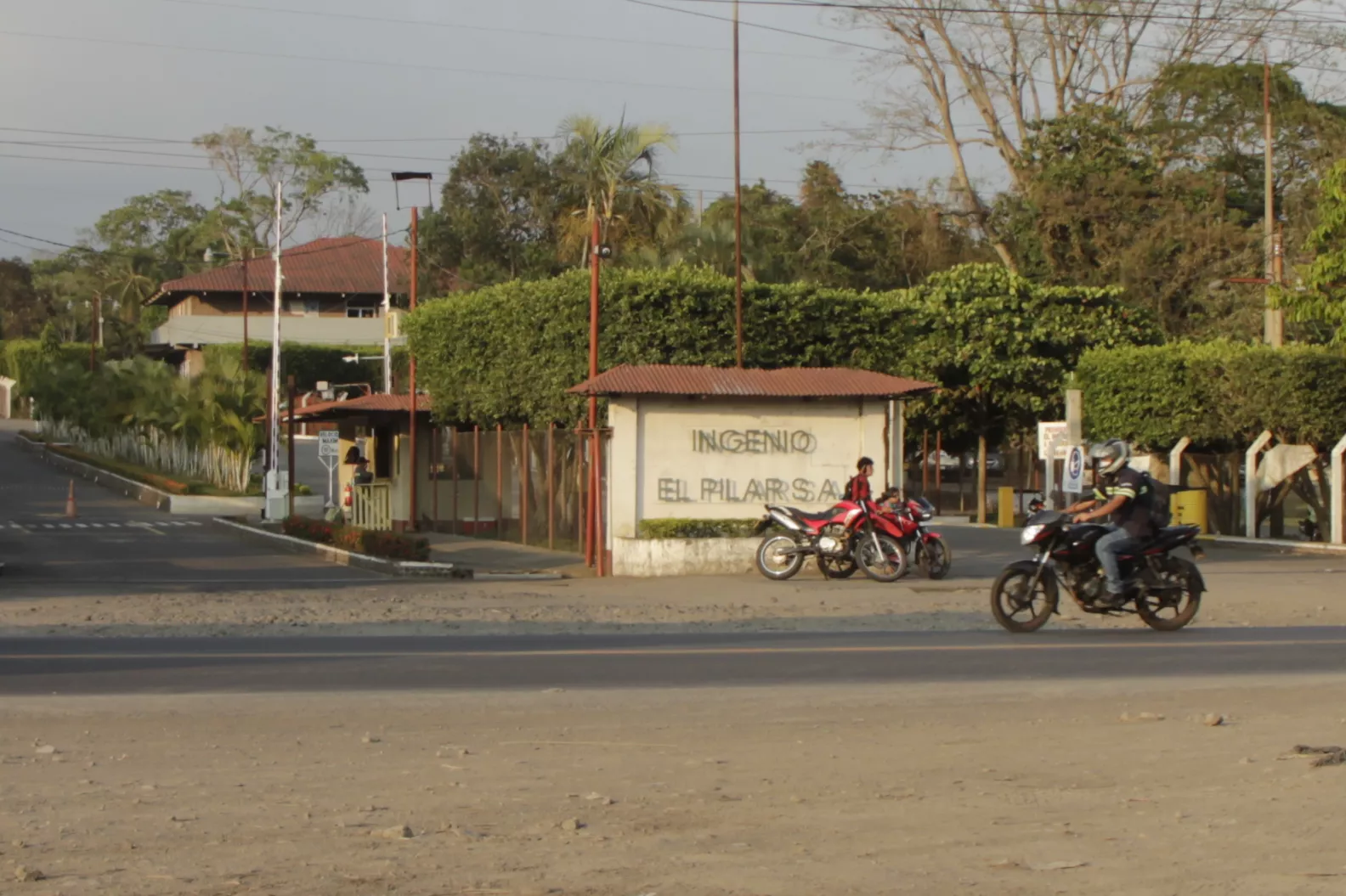
PBI Guatemala began accompanying the Pajales Sis community in its struggle in September 2025. This community is part of REDSAG and actively participates in defending communities’ rights to water and a dignified life, and in opposing the monoculture plantations whose operations threaten them. From an agroecological perspective, REDSAG does not consider monoculture farming to be compatible with food sovereignty, due to the damage it causes to biodiversity and the fact that, in many cases, pesticide spraying and the use of agrochemicals affect communities’ fields and crops. The Network supports different struggles against monoculture plantations in different parts of the country, such as the case of Pajales Sis.
The Pajales Sis community, in San Andrés Villa Seca, Retalhuleu, is located between the El Pilar and Tululá sugar mills. José Miguel Sánchez, a COCODE member and resident of Pajales Sis, explains that this community “is a prime example of all the problems that exist from Escuintla to San Marcos. It’s all the same issue: water, pollution, sugarcane… As a community, we’re right in the middle of these huge sugar mills.”1 According to the community, when the sugar companies came to their lands, they promised them numerous benefits; they told them they would “give them a water tank, a field, and that they would build a bridge. But all of that was a lie.” José Miguel states that, in addition to the broken promises, the community has suffered—and continues to suffer—the negative effects of the sugar mills’ operations, especially on its rivers. “In 2013, they changed the course of the Sis River to create an open canal that carries away all the industrial waste from the El Pilar sugar mill. From there, it flows right through the middle of the community.”2
As José Miguel explains, one of the main issues facing the community is that the El Pilar sugar mill has changed the course of the river and polluted it. The company changed the course of the Sis River, creating a canal that runs through the community and is used to transport the mill’s industrial waste and agrochemicals. Residents claim that this open canal creates a strong, unpleasant smell in the area and encourages the proliferation of mosquitoes that transmit serious diseases, jeopardizing the community’s health. This situation is exacerbated by the lack of maintenance of the gabions built by the company. Gabions are walls erected on both sides of the river to contain the flow of water. Because of the lack of maintenance, most of these walls have already collapsed, leaving the community at high risk of flooding during the rainy season. At the same time, during the summer, the company exacerbates droughts by using river water to irrigate its sugarcane crops, significantly reducing the amount of water available to families.
Apart from the impacts on the river, sugar production has other negative effects on community life. One negative impact comes from burning sugarcane left over from the last harvest, a technique used to prepare the land for the new harvest. This practice covers homes, businesses, and community spaces with ash, affecting animals, harming the environment, damaging the roofs of homes, and causing respiratory problems among community members. Furthermore, there are also serious health risks associated with periods in which pesticides are sprayed on the sugarcane monoculture crop. José Miguel and his family are particularly hard hit by this, as the sugarcane fields are located less than five meters from the door of their home, exposing them directly to the effects of burning and spraying.
The community has organized many protests against the sugar mills’ harmful practices in the region and to demand respect for the environment and the human rights of community members. “Our struggle in Pajales Sis began in 2017,” explains José Miguel, “We started speaking out against how the sugar mills are changing the course of the river and polluting the entire southern coast.”3 In addition to all the negative impacts described above, José Miguel finds himself in a precarious security situation due to the reprisals he has faced for his leadership in the struggle against the sugar mills. He has been receiving threats for years and has been the target of efforts to criminalize him. In fact, he has been facing criminal charges since 2017, when his struggle began, which were brought by one of the region’s sugar companies, El Pilar. The company uses criminalization as a strategy to obstruct their work defending communities’ rights and to instill fear, just as has happened with other criminalized human rights defenders.
Though José Miguel faces security threats and criminalization, he has not given up his struggle and continues to speak out about the sugar companies’ abusive practices. Because of the complaints he and other community members have filed, Pajales Sis is currently involved in two ongoing legal proceedings: one civil and one criminal. The ongoing civil case concerns the gabions that El Pilar built. As for the criminal case, the community is demanding that the sugar mill take responsibility for polluting the river. Although several of the complaints they filed were dismissed, one of them—filed in 2019—has moved forward.
As part of that case, in 2025 the Public Prosecutor’s Office (MP) conducted an investigation to gather evidence on the sugar mill’s premises and look into the allegations against the company. However, this investigation, which was supposed to be conducted unannounced to ensure impartiality, was coordinated in advance with the sugar company. Community members state that they identified the locations where water samples should be taken, as those were the areas where pollution was observed. However, samples were taken at other locations where the water showed no signs of contamination. As a result, the investigation came back negative and concluded that no toxic substances were found in the river.
In March 2026, a hearing was held at the Retalhuleu Judiciary to follow up on the case and present the results of the investigation. Although José Miguel, as the plaintiff in the case, was summoned, he was not allowed to enter the courtroom. Only a company representative and a representative from the MP were present at the hearing, while José Miguel and his attorneys were forced to wait outside. During the hearing, the case was closed based on the investigation results. José Miguel and his attorneys rejected the decision due to the alleged irregularities during the investigation and the serious impact the company has had on the community.
Because of his concerning security situation, PBI has been accompanying José Miguel Sánchez, a member of REDSAG’s political council, since April 2026.
1 Interview with José Miguel Sánchez, Political Council of REDSAG, 12 March 2026.
2 Ibid.
3 Ibid.